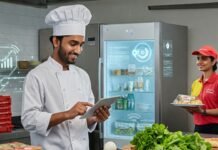








A few years ago, cloud kitchens felt like a clever business experiment. Small kitchen spaces, no expensive dining areas, food delivered directly through apps — simple idea, lower operational costs, faster scalability. Then suddenly, the model exploded everywhere.
Now almost every major city has hidden kitchens operating quietly behind apartment blocks, warehouses, or commercial buildings, preparing food for hundreds of online orders daily. But as the industry grows, so do its operational challenges. Electricity bills rise. Fuel costs fluctuate. Delivery systems consume energy constantly. Food businesses that once looked “lean” are beginning to realize they still carry significant environmental and financial pressure behind the scenes.
That’s where solar energy enters the conversation.
More cloud kitchen operators are now exploring whether renewable energy can make these businesses more stable, cost-efficient, and sustainable long term. And honestly, it’s not as unrealistic as it sounded a few years ago.
Cloud Kitchens Already Have One Big Advantage
Traditional restaurants consume energy everywhere — dining lights, air conditioning, decorative setups, large customer-facing spaces, parking areas, and more. Cloud kitchens remove many of those overheads automatically because customers never physically visit the location.
That alone reduces energy demand significantly.
Most cloud kitchens focus almost entirely on cooking operations, refrigeration, packaging, and digital order management. Since their infrastructure is comparatively compact, integrating solar power becomes more practical than retrofitting large dine-in restaurants.
In cities with high sunlight exposure, rooftop solar systems can offset a meaningful portion of daily electricity usage.
And for businesses operating on tight margins, even moderate energy savings matter a lot.
Rising Electricity Costs Are Pushing Businesses Toward Alternatives
Food businesses depend heavily on electricity. Refrigerators run nonstop. Exhaust systems stay active for long hours. Freezers, mixers, ovens, POS systems, lights, and internet equipment collectively consume huge amounts of power every month.
For cloud kitchen owners, utility bills can quietly become one of the largest recurring expenses.
That’s partly why Solar-powered cloud kitchens sustainable food business model ban sakte hain kya? is becoming an increasingly relevant question in the hospitality industry.
Operators are no longer looking at solar energy purely from an environmental perspective. Many see it as financial protection against unpredictable electricity costs over time.
And honestly, that’s usually how sustainability scales in business — when eco-friendly decisions also make economic sense.
Solar Energy Fits Surprisingly Well With Daytime Operations
One interesting thing about many food businesses is that peak prep work often happens during daylight hours. Ingredients get processed, kitchens prepare inventory, packaging stations remain active, and staff manage bulk cooking throughout the day.
That timing aligns naturally with solar power generation.
A cloud kitchen using rooftop solar panels during operational hours can reduce dependence on grid electricity substantially. In some cases, businesses may even store excess energy using battery systems for partial evening support.
Of course, solar alone may not fully power large commercial kitchens yet, especially during high-demand periods. But hybrid systems are becoming increasingly realistic.
Even partial energy independence improves operational stability.
Sustainability Has Become a Branding Advantage Too
Consumers today pay more attention to business practices than they used to.
People notice recyclable packaging, locally sourced ingredients, reduced plastic usage, and environmentally conscious branding. Younger customers especially appreciate businesses that appear genuinely responsible rather than purely profit-driven.
A solar-powered kitchen instantly creates a stronger sustainability narrative.
Now, whether customers choose food purely because of solar panels? Probably not. Taste still wins. Always. But sustainability can absolutely influence long-term brand perception, especially in crowded food delivery markets where differentiation becomes difficult.
Sometimes customers simply feel better supporting businesses trying to reduce environmental impact.
That emotional connection matters more than companies sometimes realize.
Indian Cities Make the Idea Especially Interesting
In countries like India, the solar-powered cloud kitchen concept feels particularly relevant because sunlight availability is relatively strong across many regions.
At the same time, urban food delivery demand continues rising rapidly.
Cities are filled with consumers ordering meals during work hours, late nights, and weekends. The cloud kitchen economy is still expanding, but so are concerns around energy consumption, urban heat, waste generation, and operational sustainability.
Solar integration may not solve every issue, but it could become one meaningful piece of a larger transformation toward greener food infrastructure.
And honestly, Indian startups are often surprisingly creative when adapting technology to practical business realities.
There Are Still Real Challenges
Of course, the idea sounds smoother on paper than in reality.
Initial solar installation costs can be expensive for smaller operators. Many cloud kitchens function from rented properties where infrastructure changes become difficult. Rooftop space availability also varies dramatically in dense urban areas.
Battery storage systems remain costly too.
There’s also the issue of operational consistency. Kitchens cannot afford power interruptions during food preparation or refrigeration cycles, so complete dependence on solar alone still feels risky for many businesses.
For now, hybrid energy systems probably make more practical sense than fully solar-dependent kitchens.
Technology Is Making Renewable Energy Easier to Manage
What’s encouraging, though, is how rapidly energy technology is evolving.
Solar panels are becoming more efficient. Smart energy monitoring systems help businesses track usage patterns. Commercial battery solutions are slowly improving. AI-driven kitchen management tools can even optimize appliance energy consumption during different operational hours.
This combination of food tech and renewable energy may quietly reshape restaurant infrastructure over the next decade.
And unlike some flashy tech trends, this one solves very real operational problems.
The Future of Food Businesses May Depend on Efficiency
One thing the modern food industry is learning quickly is that growth alone doesn’t guarantee long-term survival. Operational efficiency matters deeply. Businesses that waste less energy, manage resources carefully, and reduce unnecessary costs often survive market pressure better.
Solar-powered cloud kitchens fit into that mindset naturally.
They represent a broader shift where sustainability stops being treated as a marketing slogan and starts becoming part of everyday business strategy. Not because companies suddenly became idealistic, but because smarter resource usage genuinely improves resilience.
And honestly, that’s probably the kind of sustainability model that lasts — practical, gradual, imperfect perhaps, but grounded in real business logic rather than temporary trends.