Key Takeaways
- Auto Brazing Systems specializes in automated aluminum-to-aluminum brazing for evaporator and condenser coils, as well as related assemblies.
- Controlled heat, correct filler-alloy selection, and accurate part positioning are central to consistent aluminum brazing.
- The company states that applicable systems can produce more than four brazed coils per minute.
- Buyers should evaluate equipment based on throughput, first-pass yield, labor utilization, scrap, uptime, and future scalability.
- A strong project request includes drawings, material specifications, output goals, quality requirements, and facility constraints.
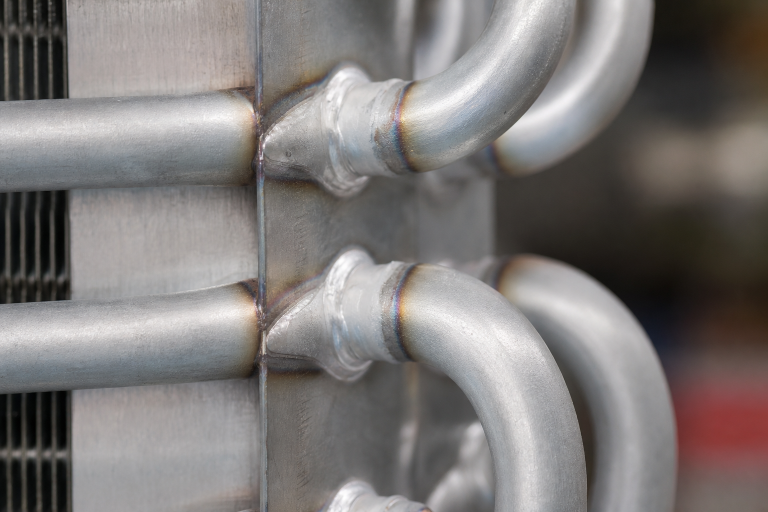
Manufacturers that build evaporator coils, condenser coils, and related heat-transfer assemblies often face the same production obstacles: labor-intensive brazing steps, uneven joint quality, rework, and difficulty increasing output without introducing new defects. automatic aluminum brazing from Auto Brazing Systems is designed to address those concerns by automating aluminum-to-aluminum brazing for repeatable, production-focused results.
Instead of relying on a process that can vary from operator to operator, an automated brazing system can help standardize part handling, heat application, filler distribution, and cycle timing. Auto Brazing Systems designs and fabricates systems for aluminum coil applications and can develop equipment from established designs or create a custom solution around a manufacturer’s production requirements.
Why Aluminum Coil Brazing Requires Controlled Automation
Aluminum brazing is sensitive to the relationship between the filler alloy and the base metal. A successful joint depends on bringing the assembly to the appropriate process conditions while preserving the components’ shape and integrity. This can be particularly important for thin-wall coil applications, where inconsistent heating or filler placement may contribute to incomplete joints, excess filler, rework, or scrap.
Auto Brazing Systems lists AA4047 as one filler option for aluminum-to-aluminum brazing. Its published specifications identify AA4047 as 12 percent silicon and 88 percent aluminum, with a melting range of 1,072°F to 1,080°F. The company also identifies AA3xxx tube material and a published total temperature window of 94°F for that application. These specifications illustrate why automated control of the brazing cycle can be valuable.
For manufacturers with a project that is still undergoing design and manufacturability evaluation, an early engineering review can help determine whether the part geometry, alloy combination, loading approach, inspection method, and targeted cycle time are compatible with a practical automated solution.
Common Problems Automation Can Help Address
- Inconsistent filler placement at the joint area.
- Uneven heating from one assembly to the next.
- Manual handling steps that restrict output.
- Variability in cycle timing and operator technique.
- Rework caused by incomplete or unacceptable joints.
- Difficulty scaling production while maintaining repeatability.
How Auto Brazing Systems Support Production Throughput
Automation is not simply about running equipment faster. It is about establishing a controlled process that can execute the same critical steps consistently. Automated systems can reduce repeated manual handling, support a more predictable production flow, and help manufacturers monitor performance against defined quality targets.
Auto Brazing Systems states that its automated equipment can produce more than four perfectly brazed coils per minute for applicable systems. Actual output will depend on the coil design, joint count, material combination, fixture design, loading and unloading method, inspection requirements, and integration with the surrounding production line. Throughput should therefore be evaluated with quality and uptime, rather than as an isolated number.
Why Coil Quality Matters in HVAC and Thermal Management
Evaporators, condensers, and heat exchangers are essential components in equipment that moves heat through refrigeration and air-conditioning systems. The U.S. Department of Energy identifies HVAC as the largest energy end use in residential and commercial buildings in its cited sector data, which underscores the importance of reliable component manufacturing for this industry.
RelatedWhy More Homes and Businesses Are Choosing Bottleless Water Systems Over Bottled Water
Auto Brazing Systems serves applications connected to HVAC, refrigeration, appliances, automotive components, and other manufacturing environments that use aluminum or copper assemblies. Its aluminum-to-aluminum systems are intended for evaporator and condenser coils, including thin-wall components. Reliable brazed joints can support the quality objectives manufacturers set for their thermal-management assemblies, including downstream leak-testing and inspection requirements.
Services and System Capabilities
Auto Brazing Systems offers a focused range of automation capabilities for companies seeking to modernize or expand brazing operations:
- Automatic aluminum brazing: Equipment for aluminum-to-aluminum coil and component applications.
- Custom brazing system development: Systems designed around product geometry, production rate, plant layout, and process needs.
- Automatic copper brazing: Automation options for copper applications, including systems that can integrate with robotic arms.
- Production-line integration: Equipment designed to support repeatable material flow and consistent cycle execution.
- Application guidance: Technical discussions that consider materials, joint design, output targets, inspection, and automation scope.
When to Submit an Automatic Aluminum Brazing Request
A manufacturer should consider an application review when manual brazing limits capacity, labor availability affects schedules, quality variation creates excessive rework, or a new coil design requires a dedicated joining process. It is also appropriate when an existing line needs modernization or when production volume must increase without compromising repeatability.
Information to Include in a Request
- Part drawings, dimensions, and joint locations.
- Tube, fin, header, and filler-alloy material details.
- Required production rate and current cycle time.
- Labor requirements for the current process.
- Quality standards, inspection methods, and leak-testing expectations.
- Available floor space, utilities, and plant-layout limitations.
- Desired loading, unloading, robotics, and inspection features.
- Expected future product variations or volume expansion.
How to Compare Brazing Automation Options
Buyers should compare systems according to the demands of their own process, rather than relying on a generic equipment specification. Important evaluation points include:
- Material compatibility: Confirm that the system is suited to the required aluminum or copper components and filler materials.
- Production capacity: Compare demonstrated cycle performance with current and projected output requirements.
- Customization: Determine whether the equipment can accommodate product geometry and plant layout.
- Process control: Review how the system manages heating, filler flow, positioning, and cycle timing.
- Quality verification: Establish how first-pass yield, leak-test results, scrap, and rework will be measured.
- Scalability: Consider future product changes, additional automation, and production expansion.
Metrics to Track After Installation
To assess the value of an automated brazing system, manufacturers can track coils produced per minute, first-pass brazing success rate, leak-test pass rate, labor hours per completed coil, filler-alloy usage, scrap percentage, rework percentage, changeover time, and unplanned downtime. These metrics provide a clearer view of performance than production speed alone.
RelatedWhy More Families Are Choosing Reverse Osmosis Water Systems for Everyday Living
Frequently Asked Questions
Can Auto Brazing Systems build a custom machine?
Yes. Auto Brazing Systems states that it can provide systems based on existing designs or develop custom automated brazing solutions around a manufacturer’s process needs.
What is AA4047 filler alloy used for?
AA4047 is an aluminum-silicon filler alloy used in aluminum brazing applications. Auto Brazing Systems lists a composition of 12 percent silicon and 88 percent aluminum, along with a melting range of 1,072°F to 1,080°F.
What should manufacturers prioritize when selecting equipment?
Priority factors include material compatibility, process control, target output, quality requirements, available floor space, maintenance needs, and the ability to support future production changes.
In Summary
Auto Brazing Systems provides an automation path for manufacturers that need more consistent aluminum coil brazing, reduced dependence on manual process variation, and equipment tailored to production needs. A detailed application review based on the part design, materials, quality targets, facility requirements, and projected output is the most practical starting point for selecting the right system.