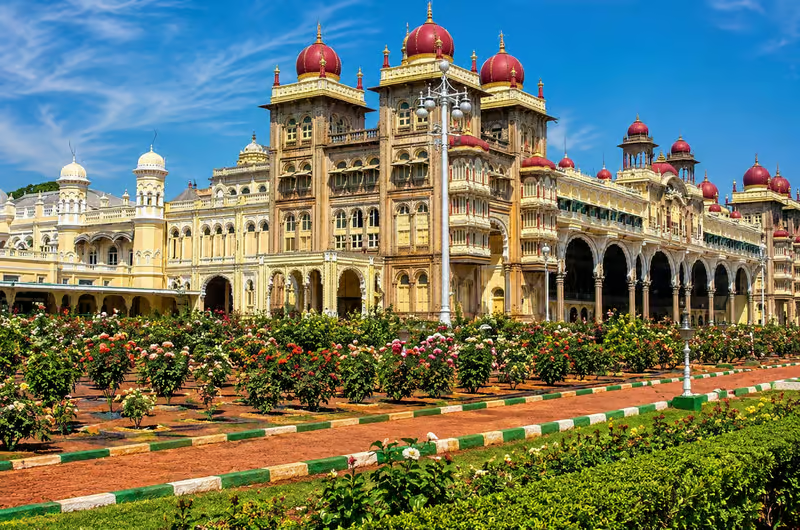
I had always thought of Mysuru for its magnificent palace, vibrant marketplaces, and the well-known landmarks that are mentioned in most tourist publications. Before going on to the next attraction, I planned to spend my day touring historical sites, taking pictures, and sampling regional cuisine. I hadn’t thought how much of the city’s personality is outside of these crowded areas. I gained a new view by strolling through its conventional residential streets. It felt more intimate, quieter, and more rooted in daily life.
While some alleys featured modest temples, local stores, and trees that offered much-needed shade, others featured antique homes with sloping tiled roofs, wooden doors, and shaded verandahs. Although there wasn’t a major attraction around every corner, it was still a part of the experience. I was able to explore Mysuru’s older areas without following a set route, pause when something caught my eye, and observe how they remained vibrant communities.
The old houses made me curious about Mysuru’s architectural heritage
The variety of classic homes strewn throughout the older residential districts was among the first things I noticed. Some had huge front verandahs, wooden pillars, and roofs with red Mangalore tiles, while others had ornate entrances and large courtyards. The area’s temperature, materials, and lifestyles influenced the architectural design of these homes.
The Thotti Mane, a traditional Karnataka courtyard home, caught my attention in particular. These houses are built around an open courtyard that lets in natural light and ventilation. Although not all historic houses in Mysuru have this style, I could see how residential architecture has changed over time by observing the entrances, rooflines, and remaining traditional elements.
Because of its historic streetscapes, places like Agrahara and the older neighbourhoods surrounding the city centre are worth seeing. Smaller elements like carved wooden entrances, antique window frames, and the occasional decorative element over an entry were interesting. Rather than expecting every street to appear the same, the charm is in observing the blend of old and new, since some properties have been modified or renovated.
Agrahara showed me a quieter side of Mysuru
One place that gave me a better understanding of Mysuru outside of its popular tourist destinations was Agrahara. These kinds of traditional neighbourhoods are historically linked to residential areas, temples, and the city’s earlier structure. I learnt how village life coexists with Mysuru’s expanding metropolitan landscape by strolling through its streets.
Additionally, I discovered that residential streets aren’t always tourist destinations in the traditional sense. Their history, architecture, and sense of community are what make them appealing.
Mysuru’s small temples and neighbourhood shrines caught my attention
Temples and minor shrines are frequently woven into the streets of Mysuru’s ancient residential neighbourhoods. While some feature vibrant entrances, sculptural embellishments, or a prominent location in the community, others are simple buildings that may be overlooked when driving.
I liked observing how these places of worship blended in with the neighbouring streets. A temple may be next to a row of homes or near a neighbourhood store, and locals may visit it daily. These locations provide a window into the cultural customs that are still significant to the city.
Depending on the location they select, visitors who want to see Mysuru on foot can include well-known local temples in their itinerary. Before scheduling an internal visit, remember to confirm access and schedules. Respect for worshippers, quiet conduct, and modest attire keep the experience respectful.
Staying near the older neighbourhoods made exploring Mysuru easier
Choosing accommodation with convenient access to the city centre helped make these walks more flexible. Travellers comparing hotels in Mysuru can consider location in relation to the old residential areas, local markets and transport links. Staying nearby makes it easier to head out in the morning, return for a break and continue exploring later without arranging transport for every short journey.
The rest of the trip determines the best place. A central base may be preferred by tourists who want to see Mysore Palace, Devaraja Market, and other significant sites. Tourists who are moving farther from the city should also take public transportation and main roadways into consideration.
Final thoughts
I saw a side of Mysuru that I might not have noticed by exploring its traditional residential lanes. A more subdued image of Mysuru, one formed by its past but yet very much a part of the present, was provided by the tiled roofs, ancient wooden doorways, local temples, and ordinary stores.
I would happily make time for these walks again, especially in the morning, when the streets begin to come alive. I would also leave room for an unplanned breakfast stop or a closer look at an old house along the way. For anyone planning a visit, hotels in Mysuru that provide convenient access to the older neighbourhoods can make it easier to experience this less hurried side of the city alongside its famous attractions.