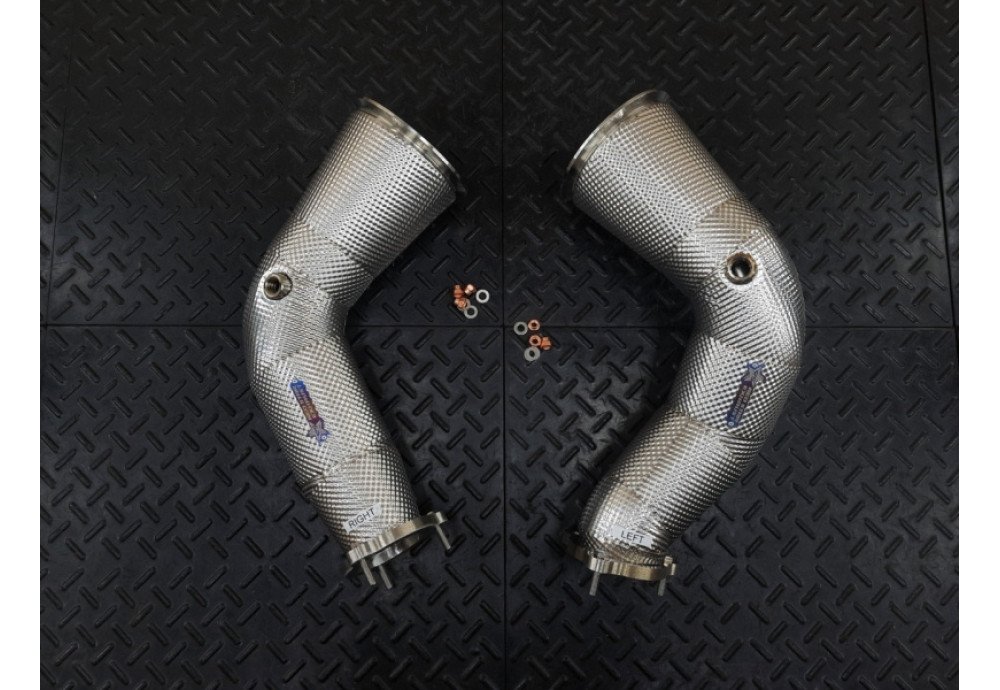
Mercedes-AMG vehicles are known for combining luxury, technology, and serious performance. For enthusiasts who want to improve the character of their AMG, the exhaust system is often one of the first areas to consider. Downpipes are particularly important on turbocharged engines because they sit close to the turbochargers and influence how efficiently exhaust gases move away from the engine. A carefully designed downpipe can become an important part of a broader performance setup.
Understanding the Role of Downpipes
A downpipe connects the turbocharger outlet to the rest of the exhaust system. Factory components are generally designed around emissions, noise, comfort, durability, and regulatory requirements. Performance-focused alternatives can prioritize smoother exhaust flow and reduced restriction.
The actual gains from a downpipe upgrade vary depending on the engine, calibration, exhaust configuration, and supporting modifications. Some owners combine downpipes with ECU tuning and other exhaust components to create a balanced package. Professional installation is recommended because correct fitment and sensor positioning are important for modern AMG vehicles.
Mercedes-AMG GT 63 X290 Performance Options
The AMG GT 63 X290 is a distinctive four-door performance car with a powerful turbocharged drivetrain. Owners looking to modify the exhaust system may consider mercedes gt63 x290 downpipes as part of a performance-oriented build.
A vehicle-specific downpipe should account for the GT 63’s engine bay layout, turbocharger placement, exhaust connections, and oxygen sensor locations. Besides potential improvements in exhaust flow, an upgraded system can produce a more pronounced exhaust note, particularly during acceleration. The right setup depends on whether the vehicle is primarily used for everyday driving, spirited road use, or track-focused applications.
Downpipe Upgrade for the Mercedes E53 AMG
The E53 AMG offers a different performance character, combining AMG engineering with everyday usability. Enthusiasts who want to sharpen the vehicle’s exhaust response can explore a downpipe mercedes e53 amg designed specifically for its platform.
RelatedSleep Fragmentation: How Broken Sleep Can Affect Your Cognitive Performance
Choosing a model-specific component is important because modern Mercedes vehicles use sophisticated electronics and emissions monitoring systems. A properly engineered downpipe should provide accurate sensor provisions and appropriate connections while maintaining secure installation. Depending on the rest of the exhaust system, the modification may also change the volume and tone of the vehicle.
Mercedes E63 W213 Catted and Catless Choices
The E63 W213 is another popular AMG platform for performance modifications. When considering mercedes e63 w213 catted and catless downpipes , owners typically need to decide between different priorities, including exhaust flow, emissions equipment, sound, and intended vehicle use.
Catted downpipes retain catalytic converters and can offer a compromise between performance and emissions control. Catless versions remove the catalytic converter and generally prioritize maximum exhaust flow, but they can create emissions, inspection, odor, and legal concerns depending on local regulations. They may also require appropriate software calibration to prevent warning lights or drivability issues.
RelatedWhat to Look for in a High-Performance Drinking Water Filtration System
Catted vs. Catless: What Should You Choose?
The choice between catted and catless downpipes should be based on how the vehicle will be used. A catted setup can be more suitable for owners who want a performance-oriented modification while retaining some emissions equipment. Catless systems are generally associated with more unrestricted exhaust flow, but they are often intended for off-road or competition applications where legally permitted.
Before making a purchase, check local laws and vehicle inspection requirements. Emissions-related modifications can make a vehicle unsuitable for public-road use in some locations.
Choosing Quality AMG Downpipes
Material, welding quality, flange design, pipe diameter, heat resistance, and sensor placement all deserve attention when comparing downpipes. Stainless-steel construction is commonly preferred because exhaust components experience extremely high temperatures and repeated thermal cycling.
RelatedSmall Details, Better Performance: What to Look for in a Modern Water Filtration System
It is also worth confirming exact vehicle compatibility before ordering. Model year, drivetrain configuration, engine variant, and body style can affect fitment. Professional installation can help ensure correct alignment and minimize the risk of leaks or sensor-related problems.
Final Thoughts
Downpipe upgrades offer Mercedes-AMG owners an opportunity to personalize both performance and exhaust character. From the GT 63 X290 to the E53 and E63 W213, selecting components engineered for the specific platform is essential. By considering fitment, tuning requirements, emissions regulations, material quality, and intended use, enthusiasts can build an exhaust setup that complements the character of their AMG while avoiding unnecessary compatibility problems.