Key Takeaways
- A luxury vehicle repair is not complete simply because the paint looks smooth.
- Proper restoration involves exterior finish, structural accuracy, and safety technology.
- Minor damage to the bumper, grille, mirror, or windshield can affect cameras, radar, and parking sensors.
- Owners should request repair documentation, diagnostic scan results, and calibration records.
- Brand-specific procedures matter because materials, paint systems, and sensor locations vary by model.
After a collision, a premium vehicle may look finished long before it is truly restored. A clean bumper, glossy clear coat, and aligned panel can be reassuring, but appearance is only one part of the job. For drivers evaluating repair options in North Dallas, Plano, and surrounding communities, Luxury Auto Bodywork Dallas TX, from Silver Star Motorcars explains the broader work involved in restoring European luxury vehicles, including collision-related body repair, paint matching, structural alignment, and attention to driver-assistance components.
Silver Star Motorcars serves owners of BMW, Mercedes-Benz, Audi, Jaguar, Land Rover, Range Rover, and Volkswagen. That brand-focused experience is valuable because these vehicles often combine specialized finishes, mixed-material construction, and tightly integrated electronics. A quality repair should restore the car’s appearance, driving performance, and safety features.
Judge the Body and Paint Work
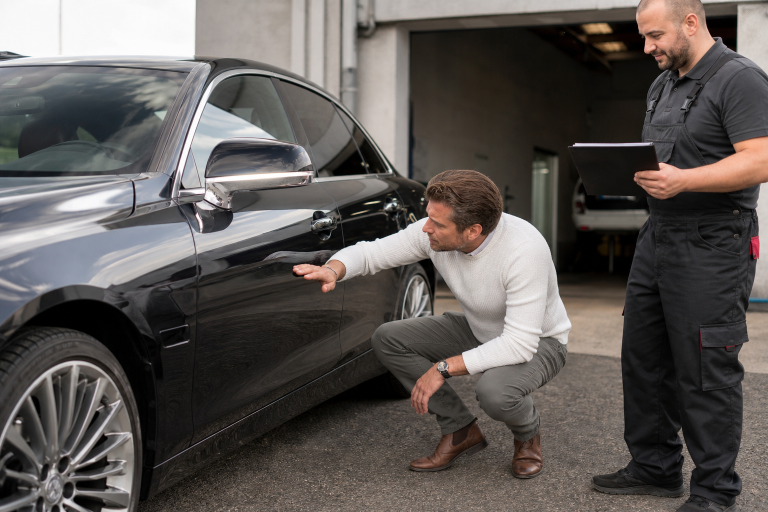
Start with the visible details, but inspect them carefully. View the vehicle outdoors in natural daylight and under indoor lighting. Metallic, pearl, and layered finishes can appear to match from one angle while showing a noticeable shade difference from another.
What to look for
- Consistent panel gaps around doors, hood, trunk, fenders, and bumper covers.
- Color that blends naturally into adjacent panels.
- No rough paint edges, trapped dust, runs, sanding marks, or dull spots.
- No overspray on trim, lamps, glass, wheel liners, tires, or weatherstripping.
- Trim, badges, moldings, and lamps that sit flush and operate normally.
On a luxury vehicle, repainting only the damaged panel may not create a convincing color transition. A repair plan may call for blending color into nearby panels so the finish looks uniform under changing light. Before accepting the vehicle, walk around it slowly, crouch to inspect reflections along the body, and compare both sides where possible.
Confirm the Structure Was Restored Correctly
Structural accuracy affects far more than panel fit. It can influence suspension alignment, steering feel, tire wear, crash-energy management, door operation, and long-term durability. A rear impact, for example, can leave a bumper cover looking straight while shifting mounting points, reinforcement components, or body structure behind it.
Modern luxury cars may use aluminum, high-strength steel, ultra-high-strength steel, adhesives, rivets, and other mixed-material solutions. These materials cannot always be repaired with the same tools or methods. The repair facility should follow the manufacturer’s procedure for the vehicle’s exact year, model, and equipment package.
Questions worth asking
- Was the vehicle measured before and after repair?
- Were factory repair procedures reviewed for the damaged areas?
- Were structural parts repaired, sectioned, or replaced as specified?
- Was corrosion protection restored after repairs?
- Was a final wheel alignment completed if the impact could affect suspension geometry?
A written answer is better than a vague assurance. The final invoice or repair file should help identify the work completed, the parts used, and the inspections performed.
RelatedHow To Choose A Hunting Rifle For Canadian Terrain In 2026
Check the Vehicle’s Safety Technology
Advanced driver assistance systems, commonly called ADAS, use cameras, radar, sensors, and software to support the driver. These may include forward collision warning, automatic emergency braking, blind-spot monitoring, lane-keeping assistance, adaptive cruise control, rear cross-traffic alert, parking sensors, and surround-view cameras. The National Highway Traffic Safety Administration’s overview of driver-assistance technologies shows how these features can warn drivers or provide limited braking and steering support.
Sensor locations differ by vehicle. They may be concealed behind bumper covers, grilles, windshield glass, emblems, mirrors, or rear body panels. That means damage that seems limited to a cosmetic component can still require diagnostic work, aiming, calibration, or a road test. No dashboard warning light automatically proves that every affected system has been checked correctly.
Why does paint thickness matter?
Paint and repair materials can be part of the safety discussion when radar sits behind a bumper cover. Adding primer, filler, paint, and clear coat may affect how certain sensors transmit or receive signals. Requirements vary widely by manufacturer and sensor location. For example, I-CAR guidance on bumper-cover repairs with ADAS describes vehicle-specific restrictions involving paint layers, filler, and repair areas near radar sensors. The practical lesson is simple: a shop should not rely on general habits when factory procedures specify limits.
A Practical Post-Repair Inspection Checklist
- Review the final repair order. Compare it with the original estimate and ask about additions or changes.
- Inspect the exterior in good light. Check color, gaps, edges, glass, trim, wheels, and lamps.
- Ask about measurements. Confirm that structural geometry was checked when impact damage made it relevant.
- Ask about diagnostic scans. Find out whether pre-repair and post-repair scans were completed.
- Confirm calibrations. Request records showing which cameras, radar units, or sensors were tested or calibrated.
- Take a short test drive. Notice steering feel, braking, vibration, warning messages, wind noise, and lane-assist behavior.
- Save the paperwork. Keep estimates, invoices, parts information, warranties, scan reports, and calibration results.
Common Mistakes to Avoid
- Choosing a repairer based only on the lowest estimate.
- Assuming a small dent or bumper scrape does not need a diagnostic scan.
- Approving a paint match without seeing the vehicle in daylight.
- Skipping the test drive and accepting the vehicle without inspection.
- Failing to ask whether original, recycled, aftermarket, or reconditioned parts were used.
- Ignoring a new warning light, unusual sensor behavior, vibration, or steering change after pickup.
- Adding accessories, wraps, coatings, or paint near sensors without confirming the manufacturer’s limits.
Look Past the Shine
A successful luxury collision repair restores more than a polished surface. It should return the vehicle’s body panels, paint finish, structure, electronics, and driver-assistance systems to proper condition. By using this three-part checkup, owners can ask more useful questions, identify concerns early, and make a better-informed decision before signing the final paperwork.