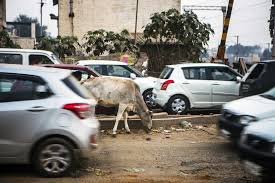
Anyone who drives regularly in India knows one thing very well — roads can change mood faster than weather. One minute you’re cruising smoothly on a freshly built highway, and the next second your car drops into a pothole deep enough to make you question your life choices. It’s exhausting, especially during long drives. The constant bumps, uneven patches, speed breakers that appear out of nowhere, and badly repaired roads don’t just damage vehicles; they wear drivers out mentally too.
Interestingly, modern automotive technology is beginning to address this problem in a surprisingly intelligent way. Car manufacturers are now experimenting with AI-powered suspension systems that don’t just react to rough roads — they predict them. And honestly, that changes everything.
The Old Suspension Story Was Simple
Traditional suspension systems were mostly mechanical. Springs, dampers, shock absorbers — all working together to absorb road impact. Some luxury cars later introduced adaptive suspension, which could adjust stiffness electronically depending on speed or driving mode.
But Indian roads are unpredictable in a different league.
A suspension setup that works beautifully on expressways may feel terrible inside cities where roads are patched unevenly every few meters. Drivers often end up compromising: either choose comfort and lose handling, or choose handling and feel every pothole through the spine.
That’s where artificial intelligence enters the picture.
Cars Are Now Learning Road Behavior
Modern AI-based suspension systems rely on a combination of cameras, sensors, radar, GPS mapping, and machine learning algorithms. Sounds complicated, but the idea is pretty straightforward.
The vehicle continuously studies the road ahead. Tiny sensors monitor wheel movement, body roll, braking pressure, steering angle, and surface vibration. Cameras scan for potholes or uneven surfaces before the tyres even touch them. The AI processes this information within milliseconds and adjusts suspension firmness instantly.
So instead of reacting after hitting a bump, the car prepares before impact happens.
That tiny difference creates a noticeably smoother experience.
In crowded Indian cities, where roads often have random height variations, this predictive behavior can reduce cabin jerks dramatically. It almost feels like the car is reading the road’s intentions.
Why This Matters More in India Than Anywhere Else
Countries with consistently smooth roads may see AI suspension as a luxury feature. In India, though, it could become genuinely practical.
Daily commuting here involves constant surface changes. Urban flyovers, village roads, broken service lanes, monsoon damage, temporary repairs — everything exists within a single route. Drivers spend hours navigating conditions that continuously challenge vehicle balance and passenger comfort.
That’s why India me AI-based suspension systems rough roads par driving comfort kaise improve kar rahe hain? is becoming an increasingly relevant discussion in the automotive industry.
Manufacturers are realizing Indian consumers don’t just care about touchscreen size or sunroofs anymore. Ride quality has become a huge selling point, especially for SUVs and premium hatchbacks.
RelatedSleep Fragmentation: How Broken Sleep Can Affect Your Cognitive Performance
People want cars that feel calmer.
The Difference You Actually Feel While Driving
Marketing brochures often overcomplicate these systems, but from a driver’s perspective, the improvements are surprisingly human.
You notice less body shake on broken roads. Speed breakers feel softer. Rear-seat passengers don’t bounce around constantly. Steering feels more stable even when the road isn’t.
There’s also reduced fatigue.
That part doesn’t get talked about enough.
Long drives on poor roads mentally drain drivers because the body continuously braces for impact. AI-assisted suspension reduces that subconscious stress. After three or four hours behind the wheel, you feel fresher compared to driving a stiff conventional setup.
And if you’ve ever travelled with elderly parents or sleeping children, you immediately understand the value of smoother ride quality.
AI Suspension Is Quietly Becoming Smarter
What makes these systems fascinating is that they improve over time.
Some advanced setups can store road condition data through cloud connectivity. That means if thousands of vehicles repeatedly encounter rough sections in a specific area, the system learns patterns. Future adjustments become faster and more accurate.
A few global manufacturers are even testing suspension systems that coordinate with navigation maps. If the software already knows a damaged road segment lies ahead, the car can prepare suspension settings in advance.
It almost sounds futuristic, but honestly, we’re already moving there.
And with India rapidly adopting connected vehicle technology, these features may become common faster than expected.
RelatedThe Three-Part Checkup: How Luxury Cars Should Be Restored After Collision Damage In 2026
There’s Still a Cost Barrier
Of course, nothing comes free.
Right now, AI-powered suspension systems mainly appear in premium vehicles because the hardware involved — sensors, cameras, processors, adaptive dampers — increases manufacturing cost. Repairs can also become more expensive compared to traditional suspension systems.
That said, automotive technology usually follows a predictable pattern. Features that once existed only in luxury cars eventually reach mid-range models.
Touchscreens did it. Rear cameras did it. ADAS features are slowly doing it too.
Suspension intelligence may follow the same path over the next few years.
Indian Roads Are Forcing Innovation
One funny thing about Indian driving conditions is that they often push companies toward real-world innovation faster than polished international markets do.
Engineers testing vehicles here quickly realize theoretical performance means nothing if passengers are constantly uncomfortable. A car might perform brilliantly on a controlled test track yet struggle terribly on uneven city roads during monsoon season.
That pressure is encouraging manufacturers to build smarter ride systems tailored for practical comfort rather than pure showroom appeal.
And honestly, drivers notice the difference.
The Future May Feel Surprisingly Comfortable
There’s a good chance future Indian vehicles won’t just respond to roads — they’ll anticipate them intelligently. AI won’t eliminate potholes, unfortunately. We’re probably still far away from that miracle. But it can reduce how aggressively those potholes affect passengers.
In many ways, this technology reflects a broader shift happening in the automotive world. Cars are no longer just machines with engines and wheels. They’re becoming adaptive systems capable of learning, adjusting, and quietly making decisions that improve everyday life.
For Indian drivers dealing with unpredictable roads daily, that evolution couldn’t come at a better time.