There’s something reassuring about filling a glass straight from the kitchen tap and enjoying a fresh drink without thinking twice. But when the water starts smelling faintly of a swimming pool, looks cloudy after repairs to the plumbing, or leaves tiny particles at the bottom of a container, that everyday comfort can disappear pretty quickly.
These changes don’t always mean the water is unsafe, but they’re worth investigating. Water can pick up different characteristics as it moves through treatment facilities, distribution pipes, and household plumbing. Sometimes the issue is a matter of taste or appearance; in other cases, testing may reveal something that needs more specific attention.
The useful thing is that you don’t necessarily need an elaborate treatment setup. Understanding the problem first can help you choose a filter that makes sense for your home.
Why Water Can Taste or Smell Different
Municipal water suppliers commonly use chlorine or related disinfectants to control harmful microorganisms during treatment and distribution. This is an important part of protecting public health, but some people notice a chemical-like taste or smell when they turn on the tap.
The intensity can vary with the water source, treatment process, and conditions in the distribution network. A noticeable chlorine smell doesn’t automatically mean the water has been treated incorrectly. Still, if the taste makes you reluctant to drink enough water throughout the day, it is reasonable to explore suitable filtration options.
Activated carbon is often used in drinking-water filters because it can adsorb certain compounds responsible for unwanted tastes and odours. The results depend on the filter’s design, the carbon media, the amount of contact time, and the substances present. Not every carbon filter performs equally, so checking the manufacturer’s specifications and relevant certifications is worthwhile.
For households hoping to reduce chlorine taste and odor, a properly selected carbon filter may be a practical option. Before buying one, confirm which chlorine-related claims are supported by the product’s performance information and how often the cartridge should be replaced.
RelatedBetter Water Starts at Home: Finding the Right Filtration Solution for Your Needs
Understanding Cloudy Water Before Choosing a Filter
Cloudy water can be unsettling, especially when it appears suddenly. You might notice it while filling a clear glass or running a bath. Sometimes the cloudiness comes from tiny air bubbles that disappear after the water sits for a short time. In other situations, suspended particles or changes in plumbing conditions may be involved.
A simple observation can provide a clue, but it isn’t a reliable safety test. If the water remains cloudy, develops an unusual colour, or changes noticeably after a plumbing repair, contact your water supplier or a qualified plumbing professional as appropriate. If contamination is suspected, arrange testing suited to the concern rather than relying on appearance alone.
Filtration can help with certain causes of cloudiness, but the filter must match the material involved. A sediment cartridge can capture many suspended particles, while dissolved substances may require entirely different treatment. A filter designed to trap visible particles won’t necessarily address bacteria, dissolved metals, or other contaminants.
When the source of the problem is understood, the right equipment can improve water clarity and make water look more appealing. The important distinction is that clear water is not automatically safe water. Appropriate testing remains essential when health-related concerns arise.
RelatedHow Modern Water Filtration Helps Create Cleaner, Better-Tasting Water at Home
What Sediment Filters Actually Do
Sediment can enter water from several sources, including disturbed plumbing, well-water conditions, and particles already present in the supply. Depending on the material, it may appear as sand, fine grit, rust-coloured particles, or a general cloudiness. Over time, these particles can collect in faucet aerators and place additional strain on certain appliances.
A sediment filter works by physically trapping particles as water passes through a filter medium. Different cartridges are designed to capture different particle sizes, so the correct choice depends on the water conditions and the level of filtration required.
For example, a coarse prefilter may capture larger particles before water reaches a finer filter. This can help protect downstream equipment and reduce the frequency with which more specialised cartridges become clogged. However, a finer filter isn’t always automatically better. If it restricts flow too much for the household’s needs, everyday water use can become inconvenient.
Homeowners looking to reduce sediment should consider both the size of the particles and the volume of water the system must handle. A water test or professional assessment can help establish whether sediment is actually the problem and which filter type is appropriate.
RelatedSmall Details, Better Performance: What to Look for in a Modern Water Filtration System
Keep in mind that sediment filtration has clear limits. It doesn’t necessarily remove dissolved minerals, disinfect water, or address every substance that affects taste. Treating it as a universal solution can leave other concerns unresolved.
Choosing Between a Kitchen Filter and a Whole-Home System
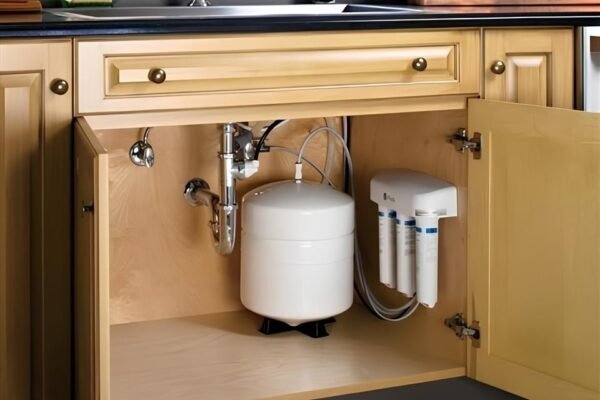
One of the first decisions is where treatment is needed. If your main concern is drinking and cooking water, a point-of-use filter beneath the kitchen sink may be enough. These systems treat water at a particular tap, allowing you to choose a technology suited to the substances you want to reduce.
Whole-home systems are installed where water enters the property and supply treated water to multiple fixtures. They may be useful when the treatment goal applies to several bathrooms, laundry appliances, or other areas of the house. The appropriate configuration depends on the test results, flow requirements, and the equipment’s verified capabilities.
Consider how your household uses water. A family that fills reusable bottles throughout the day may value a dedicated drinking-water faucet. A home with recurring sediment problems across multiple fixtures may benefit from a properly sized point-of-entry filter.
RelatedCleaner Water Starts With Understanding What’s in Your Water
Installation space, plumbing connections, replacement cartridge availability, and long-term cost deserve attention as well. Before committing, ask what the equipment is designed to reduce and whether its performance claims have independent support.
Maintenance Is More Important Than It Looks
A filter doesn’t work indefinitely without attention. As particles collect or carbon media reaches the end of its useful life, performance can decline. A neglected cartridge may allow the original taste or sediment problem to return, sometimes gradually enough that nobody notices right away.
Follow the manufacturer’s replacement schedule and keep a record of filter changes. Watch for reduced water flow, recurring odours, or the return of visible particles. These signs can indicate that servicing or further investigation is needed, although they don’t always identify the exact cause.
If a filter is part of a larger treatment system, check the maintenance requirements for every component. A prefilter, carbon cartridge, membrane, or disinfection unit may each have different servicing needs. Use compatible replacement parts and follow the instructions provided for your specific model.
RelatedWhat to Look for in a High-Performance Drinking Water Filtration System
Make an Informed Choice for Your Home
Better-tasting, clearer water begins with knowing what you want to address. A chlorine-related taste, suspended sediment, and dissolved contaminants are different concerns, and they shouldn’t be treated as though they were the same problem.
Start by observing changes, reviewing available water-quality information, and arranging suitable testing when necessary. Compare filters based on their documented performance, flow rate, installation requirements, and maintenance costs rather than choosing solely by price or the number of filtration stages advertised.
The right system should make everyday life easier without creating unnecessary expense or giving you a false sense of security. With sensible testing, a suitable filter, and regular maintenance, you can make a practical improvement to your home’s water and feel more confident about the choices you’re making.